Book Publishing Platform
A publishing management platform built around a real publisher's operation, bringing manuscript submission, editorial review, price negotiation, publication and reader discovery into one role-aware workflow.
- Focus
- Full-Stack, Client Project
- Core stack
- Next.js, TypeScript, Supabase/pgvector, Hugging Face, n8n, AWS (EC2)
- Context
- Built for Myat Pwint Book Publishing House
- Links
- Private client repository
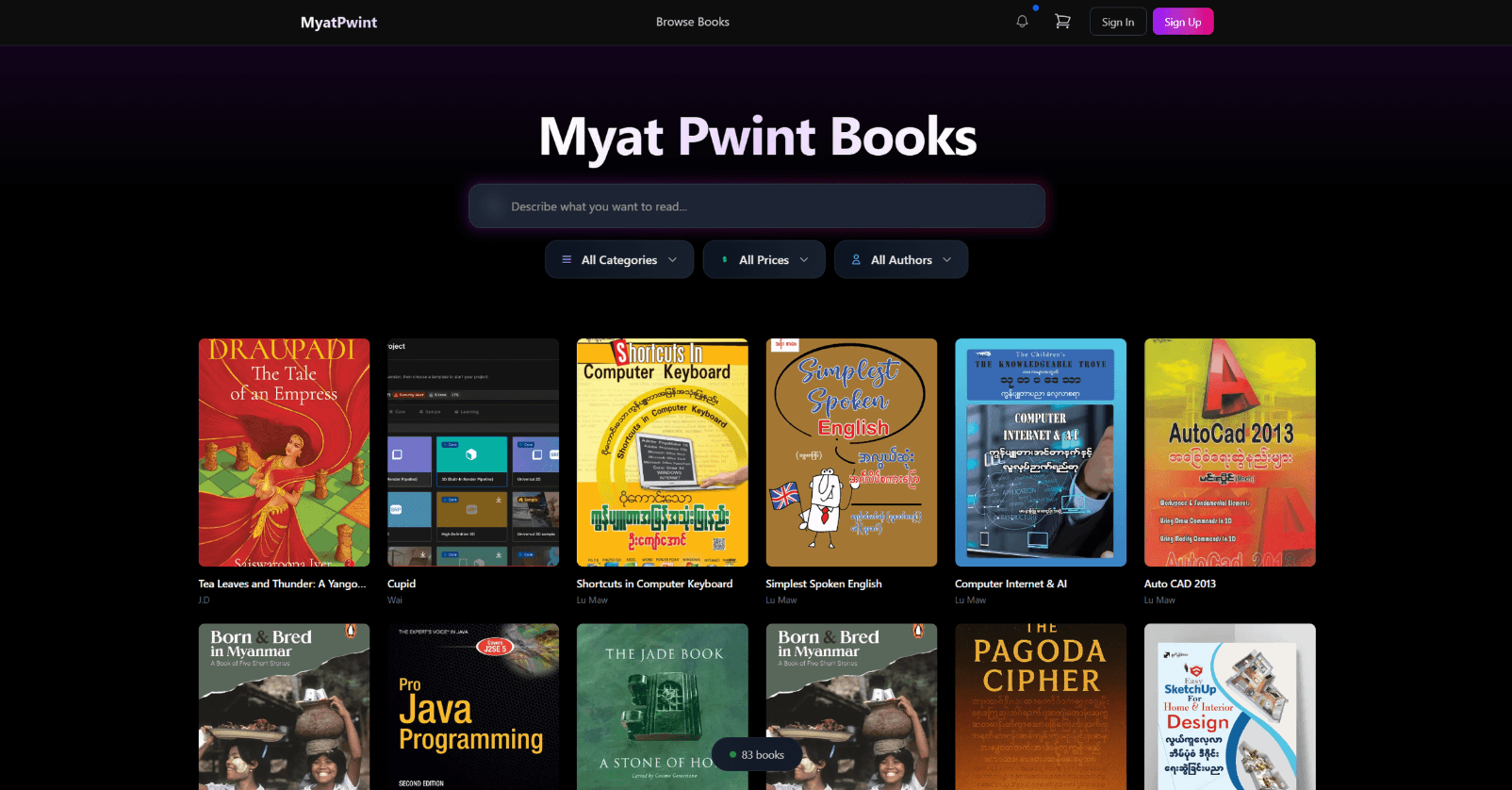
How it works
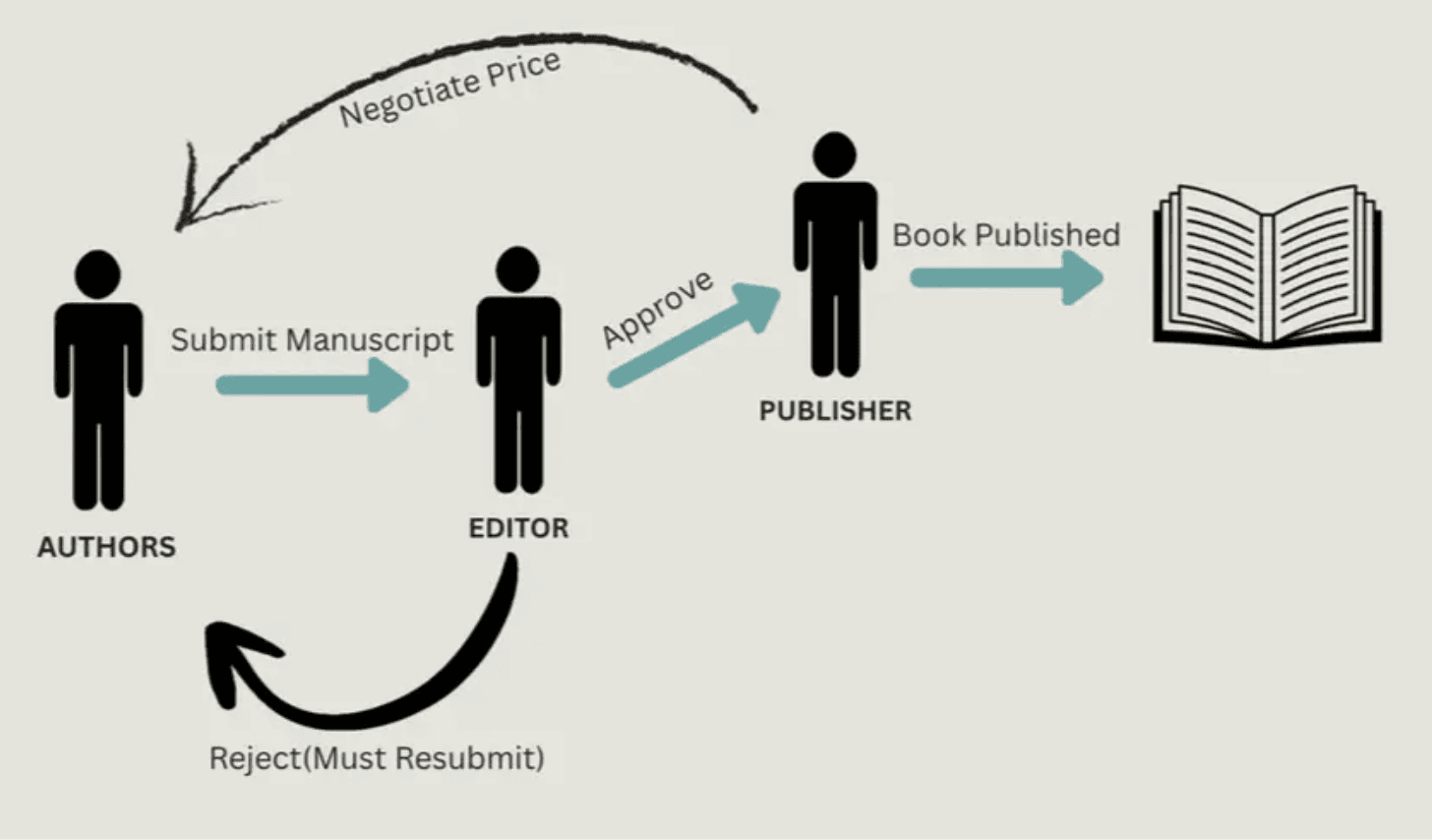
Manuscript workflow
Authors submit a manuscript to an editor, who approves it or sends it back for resubmission. The publisher then agrees the price with the author and publishes the book.
For readers
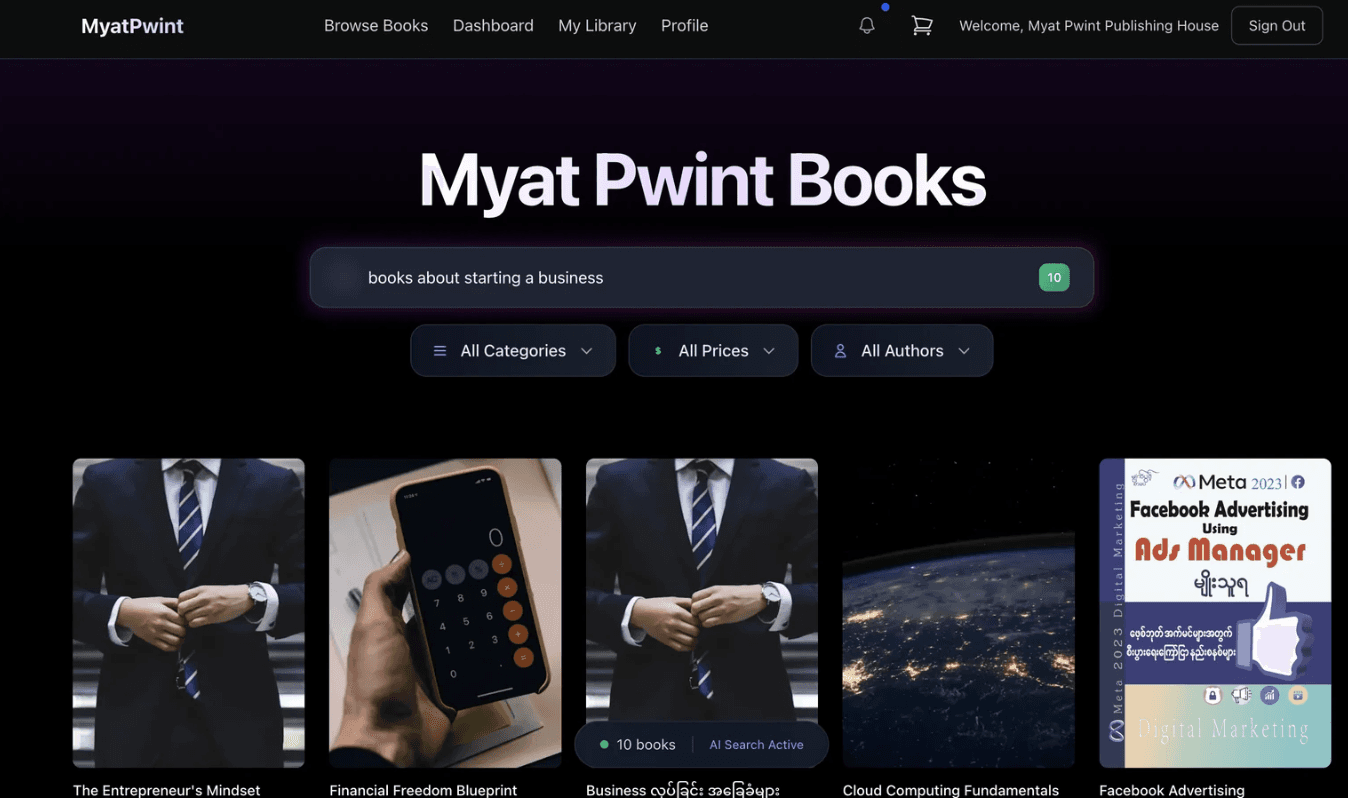
AI search
Readers describe what they want — here, “books about starting a business” — and get books matched by meaning, not just by title.

Book page
Each book has its own page with the cover, author, genres and summary, plus the publication date, edition and language.
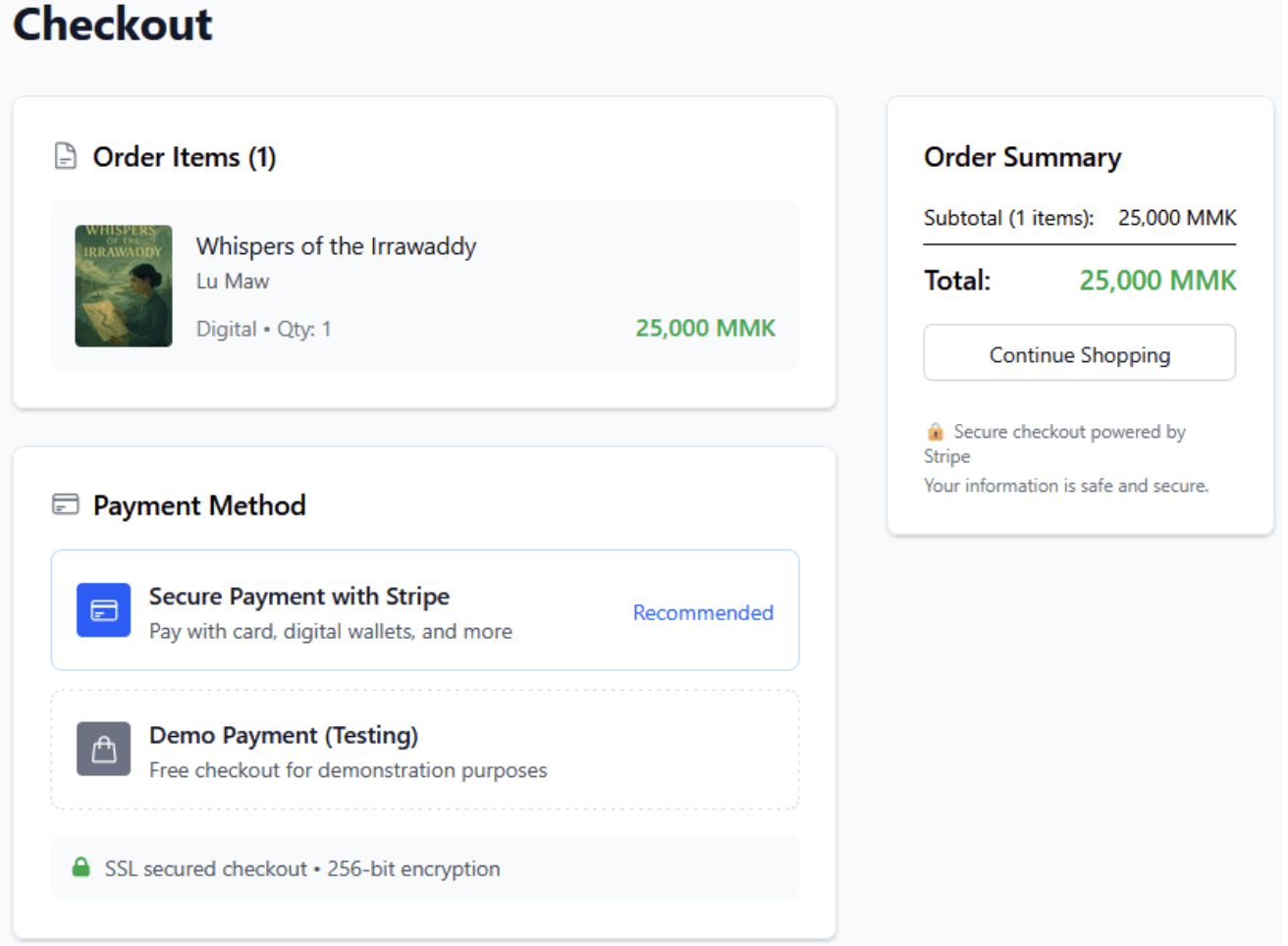
Checkout
Readers buy straight from a book’s page. This build offers a Stripe payment option and a demo payment mode used for testing.
For editors and publishers
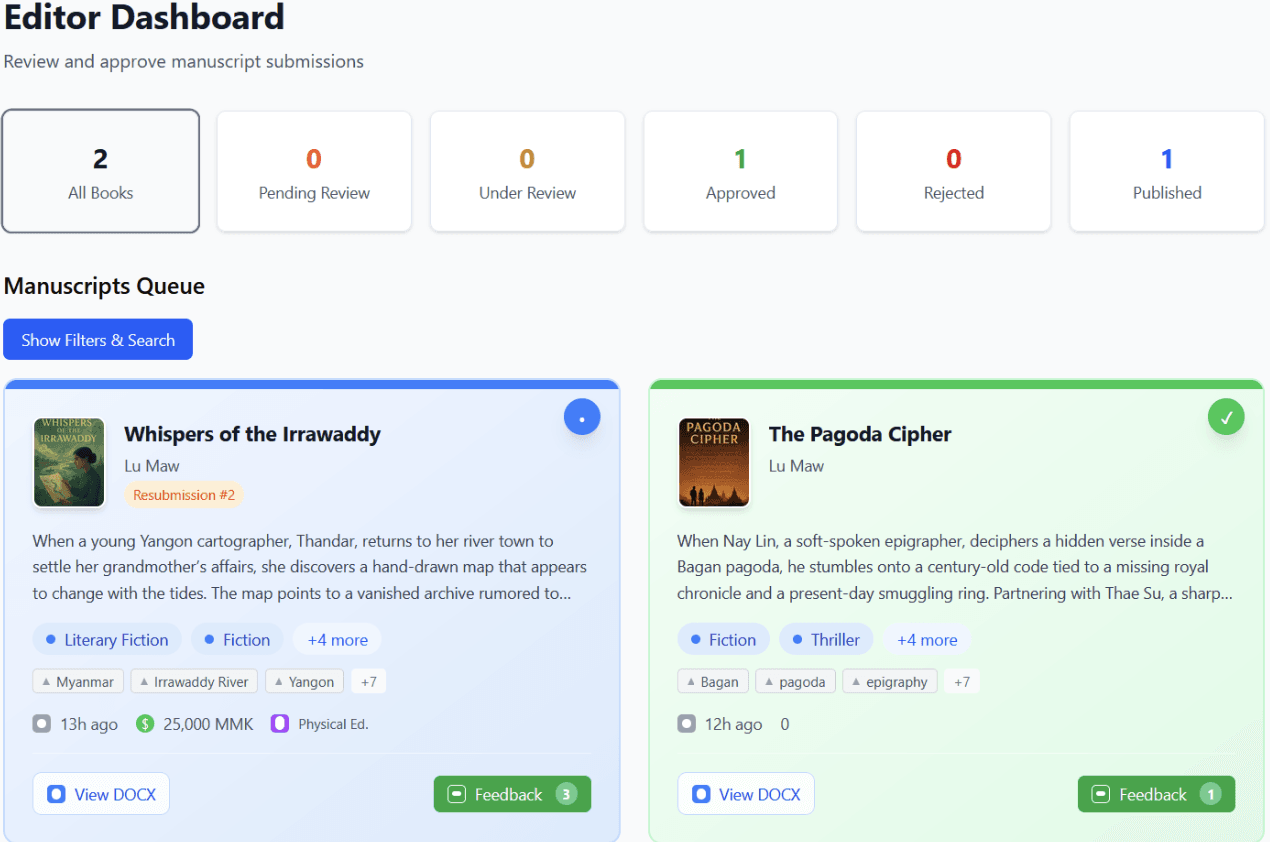
Editor dashboard
Manuscripts are tracked by status — pending, under review, approved, rejected, published. Each one has its DOCX, a feedback thread and a resubmission count.
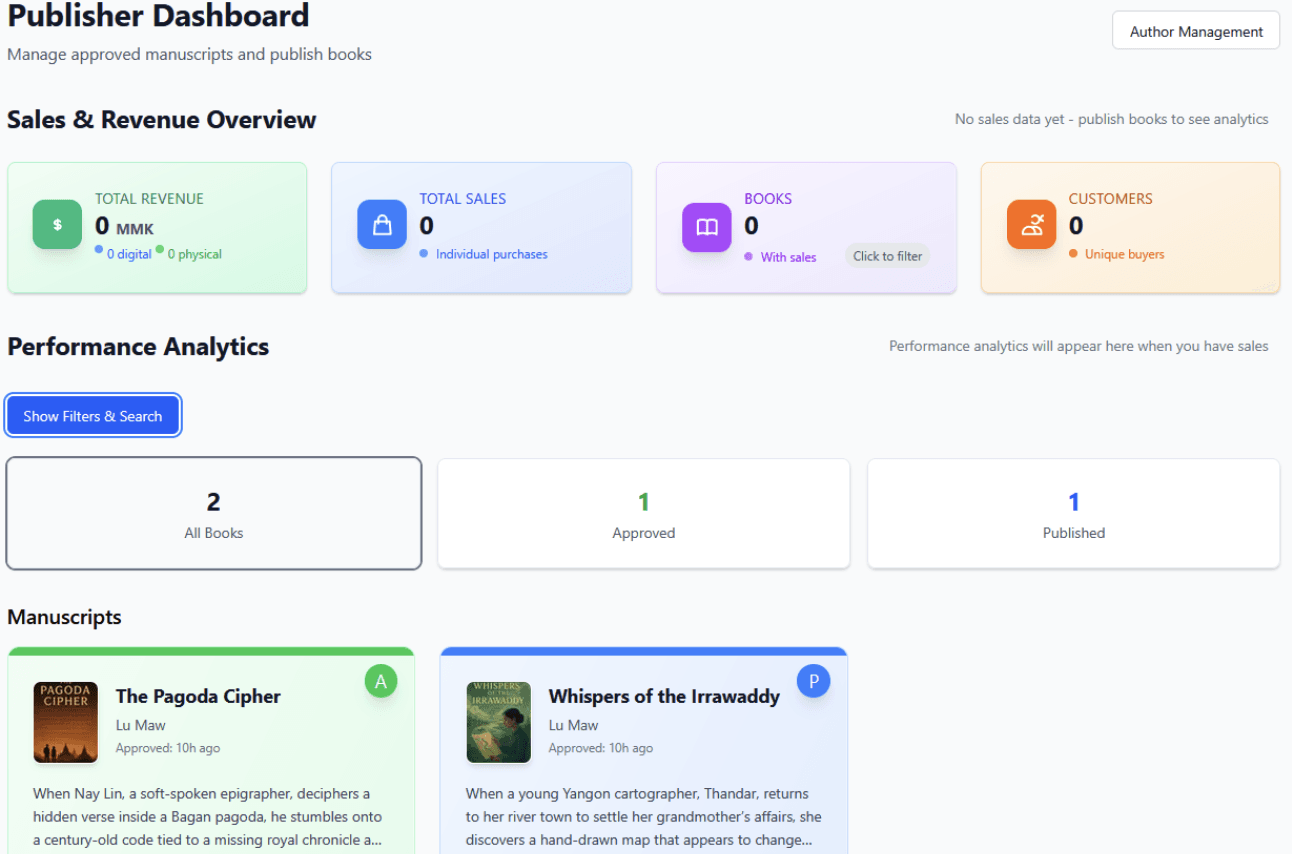
Publisher dashboard
Sales and revenue at the top, then every approved manuscript waiting to be published.
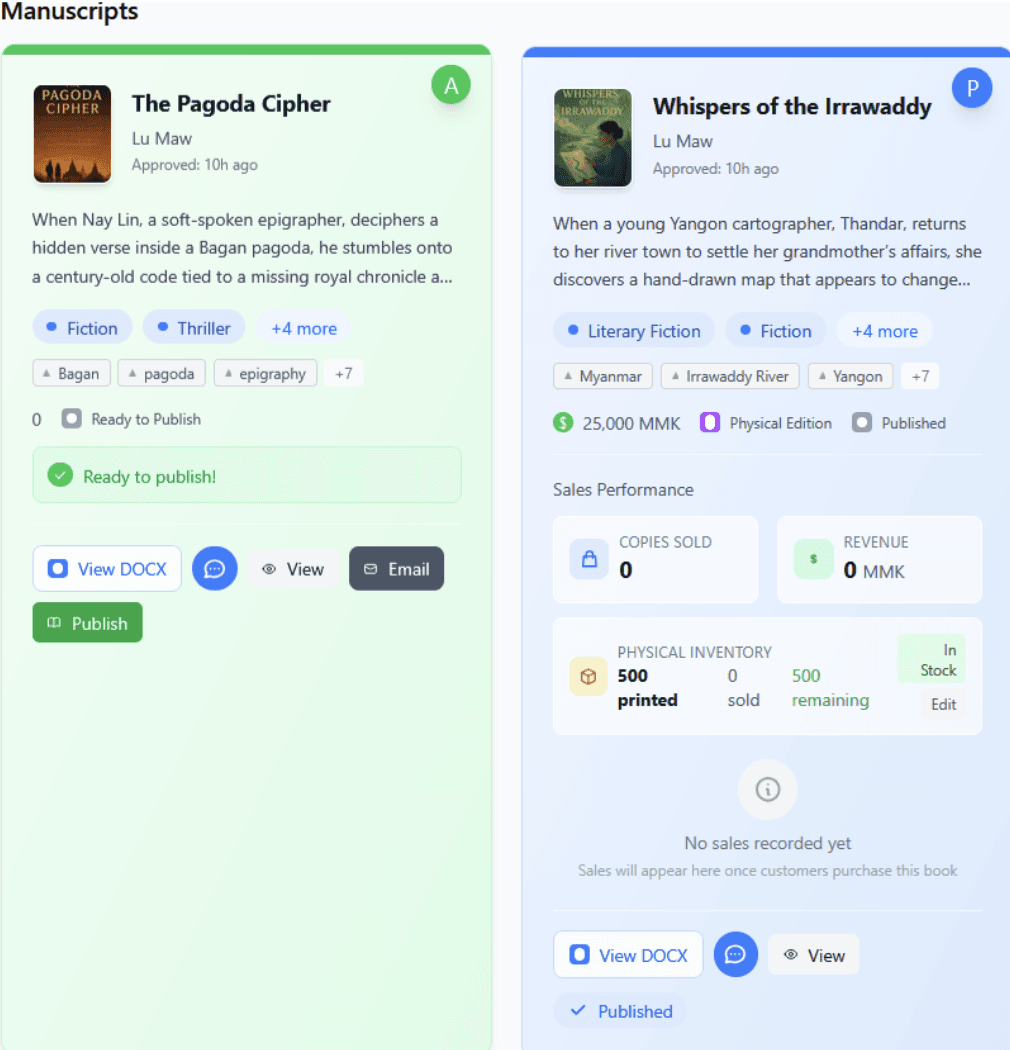
Publishing a book
An approved manuscript gets a Publish button. Once it’s published, the card tracks the price, the physical print run and stock, and sales.
Marketing automation with n8n
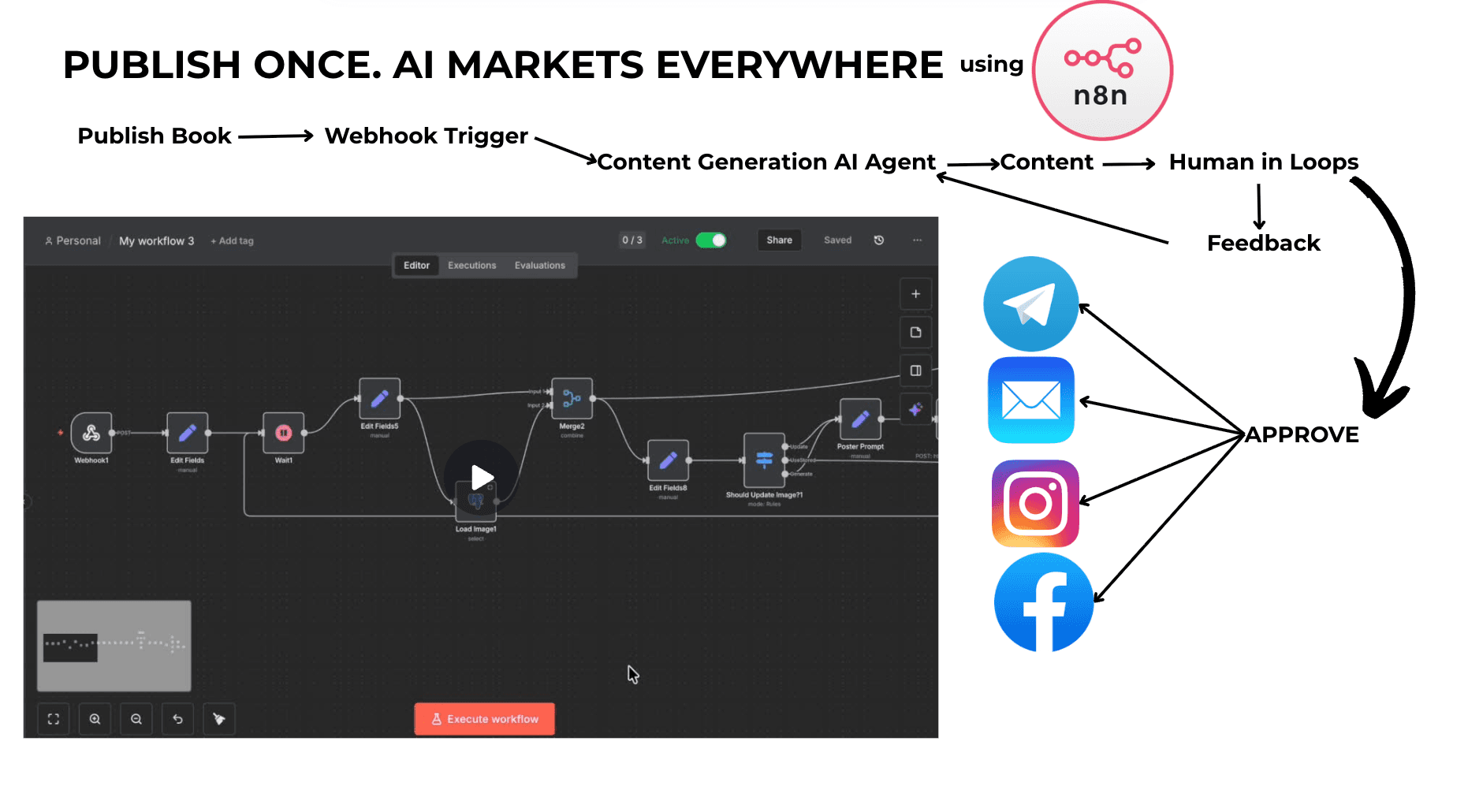
Publish once, market everywhere
Publishing a book triggers an n8n workflow through a webhook, and an AI agent drafts the marketing content. A person reviews every draft — sending feedback back to the agent, or approving it — and approved posts go out to Telegram, email, Instagram and Facebook.
System architecture
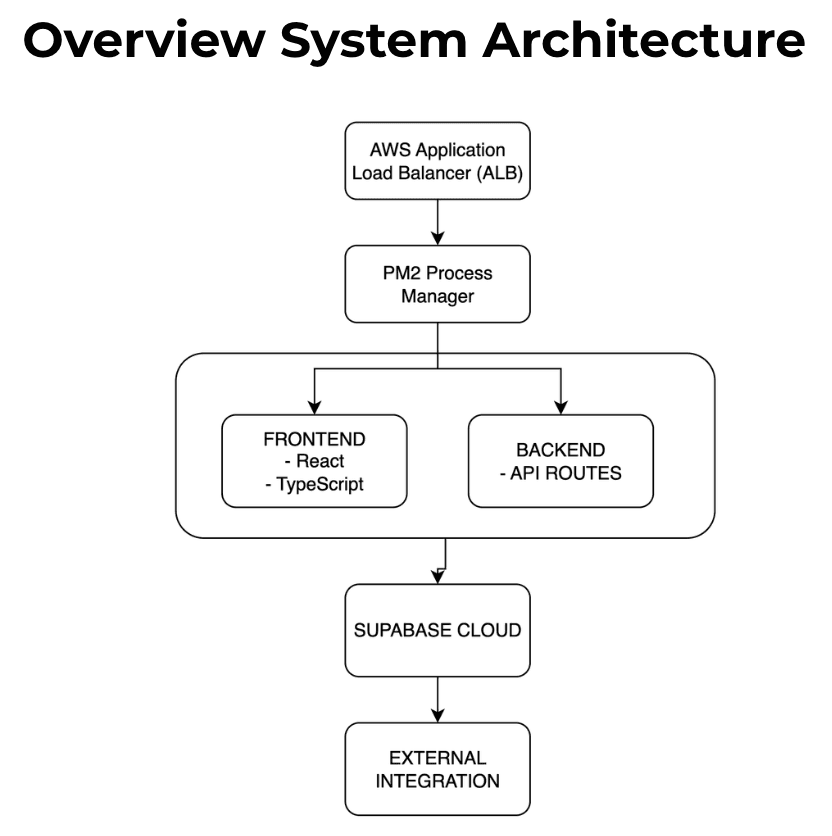
Overview
Traffic comes in through an AWS Application Load Balancer to one Next.js app, kept running by PM2, that holds both the React frontend and the API routes. The app talks to Supabase Cloud, which sits in front of the external integrations.
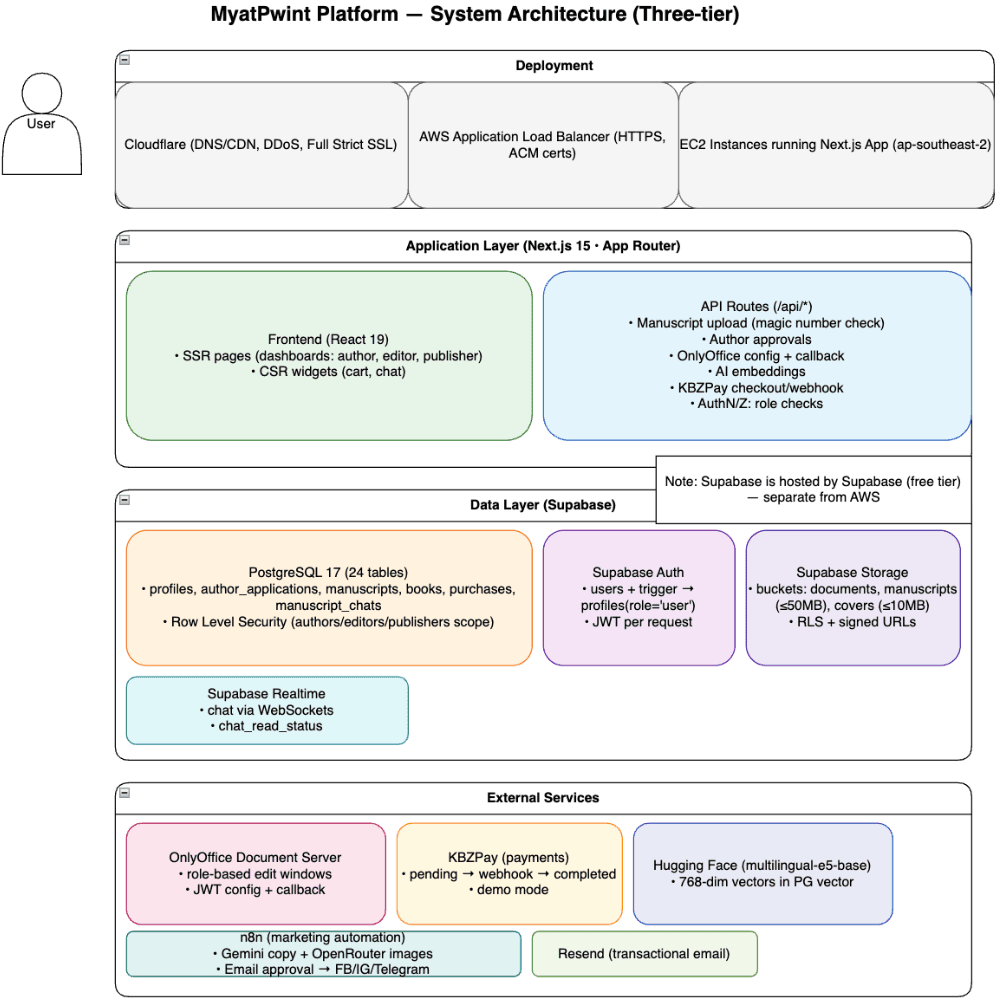
Three-tier architecture
Cloudflare and an AWS load balancer sit in front of the Next.js app on EC2. Its API routes handle manuscript uploads, approvals, OnlyOffice editing, AI embeddings and checkout. Supabase provides Postgres with row-level security, auth, file storage and realtime chat; external services cover document editing, payments, embeddings, marketing and email.